A Pioneering Beginning
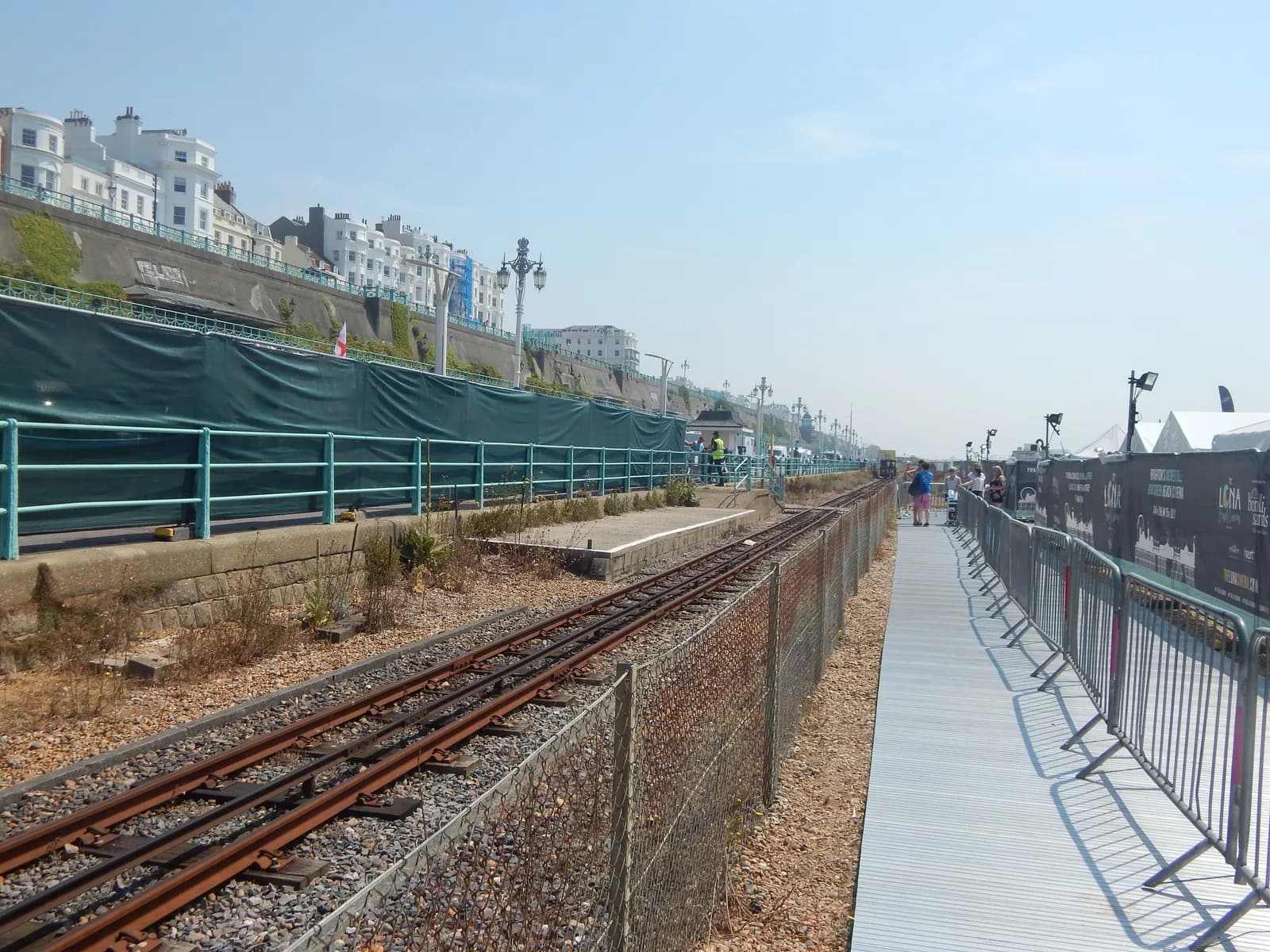
Magnus Volk opened the first section of his electric railway on 3 August 1883. The original quarter-mile route ran between Swimming Arch and Chain Pier, using a two-foot gauge and a 50-volt direct-current supply. On 4 April 1884, the line was extended by half a mile to Paston Place, now known as Halfway, and was regauged to 2 ft 8.5 in (825 mm). The electrical supply was simultaneously increased to 160 volts direct current. An offset third rail was added in 1886 to reduce current leakage.
Extensions and Route Changes
The railway reached its present eastern terminus at Black Rock on 21 February 1901. In 1930, the western end was shortened by roughly 200 yards from Palace Pier to the present Aquarium station. During the late 1990s, the Black Rock terminus was moved slightly westward by 211 feet to accommodate a storm-water storage scheme; a new single-platform station opened there in 1998. Today the line measures approximately 1.02 miles (1.64 km) and runs at 110 volts direct current.
Wartime Closure and Post-War Restoration
Brighton Corporation assumed control of the line in April 1940. It closed on 2 July 1940 as the seafront was prepared for defensive measures during the Second World War. The railway reopened in 1948 after a full rebuild. Winter services ceased from 1954, establishing the seasonal pattern that continues today.
Heritage Funding and the Present Day
In 2014, the railway received a £1.6 million grant from the Heritage Lottery Fund. The money financed a new visitor centre, ticket office, and depot, alongside restoration of the historic carriages. Brighton & Hove City Council now operates the line, which its official website describes as a “fascinating piece of living history on Brighton’s beautiful seafront.” The railway typically runs during the spring-to-autumn season; severe weather or engineering work can cause short-notice suspensions.