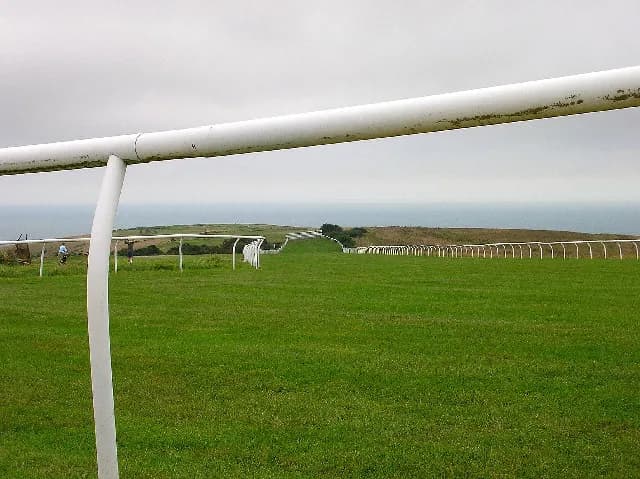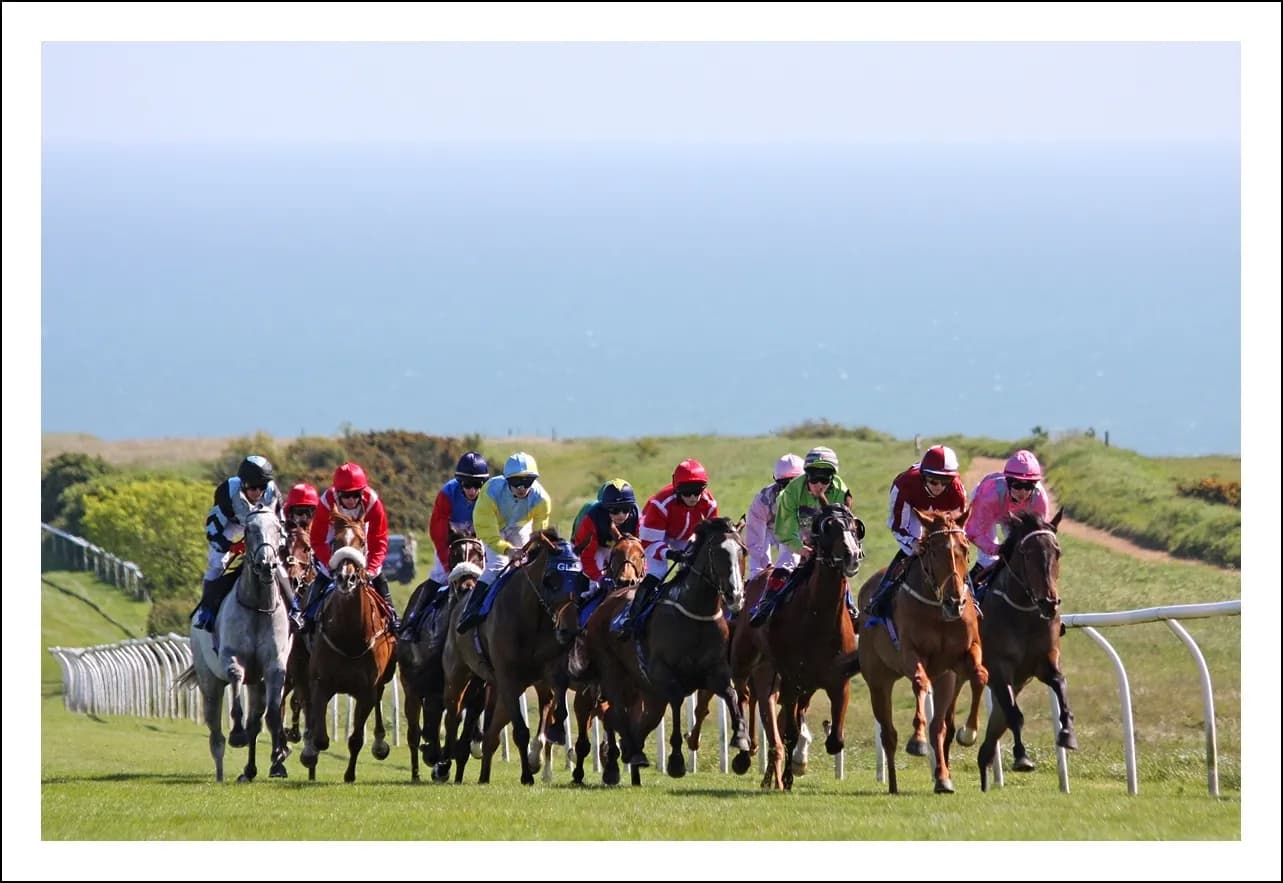
Few racecourses come with a view quite like Brighton.
High on Whitehawk Hill, around a mile from the seafront, horses race with the city spread out below them and the English Channel beyond.
It is a setting Brighton Racecourse has occupied in one form or another since the eighteenth century.
This October there are just two opportunities left to see it in action before racing on the hill stops for winter.
Brighton races on Tuesday 6th October, followed by the Season Finale on Thursday 15th October.
Four days later, attention turns inland to Plumpton for the Bob Champion Cancer Trust Raceday on Monday 19th October.
Brighton's final two meetings
The first October meeting takes place on Tuesday 6th October.
Seven Flat races are currently scheduled, with gates opening before midday and racing continuing through the afternoon. Race times can still change, so it is worth checking before travelling.
Then comes the final raceday of the year.
Brighton's Season Finale on Thursday 15th October is also expected to feature seven races, bringing another season on Whitehawk Hill to a close.
After that, the horses will not return until the 2027 season.
For anyone who has spent the summer meaning to go racing in Brighton and never quite managed it, October is the last chance.
More than 240 years on Race Hill
Brighton's connection with racing predates the racecourse itself.
There are references to horses racing in the area before 1713, but the first official meeting at the present location took place in 1783.
A year later, the Prince of Wales, the future George IV, attended.
He liked what he found.
The Prince returned with friends, brought his own horses and helped turn the races into part of fashionable Brighton life at precisely the time the town itself was becoming one of Britain's great seaside destinations.
There is even a local racing legend attached to him.
The story goes that the Prince and his companions, riding on the Downs, began jumping obstacles used to form sheep pens and inadvertently helped invent hurdle racing.
It is a good story, even if it belongs more to local folklore than firmly established history.
When royal enthusiasm for Brighton began to fade, racing suffered too.
Then the railway arrived.
By the middle of the nineteenth century it was far easier for racegoers to travel down from London, and Brighton entered another successful period. Its summer meeting became part of the racing circuit around what was known as Sussex Fortnight, alongside Goodwood and Lewes.
A racecourse that does not go all the way round
Brighton's geography is as unusual as its history.
Most racecourses form a complete circuit.
Brighton does not.
Instead, the course is a left-handed horseshoe stretching for around a mile and a half across the Downs. The longest-distance start is at the lowest point of the track, while the winning post sits at its highest.
The final two furlongs climb towards the finish.
That shape gives Brighton racing a character of its own.
Horses need to cope with changing gradients, camber and bends rather than simply producing speed in a straight line.
A runner that travels comfortably around a conventional, level racecourse may find Brighton rather less straightforward.
It is one reason experienced racegoers often pay particular attention to horses that have already run well here.
There are tracks where previous course form is interesting.
At Brighton, it can be particularly useful.
Brighton Rock and the races
The racecourse also occupies an unusual place in British popular culture.
Graham Greene's Brighton Rock, published in 1938, helped cement the association between interwar Brighton, racecourses and criminal gangs.
The novel follows teenage gang leader Pinkie Brown through a darker version of the seaside resort, with the races becoming part of the atmosphere surrounding Brighton's underworld.
Relatively little of the novel actually takes place at the racecourse itself, and the gang violence of the period was certainly not unique to Brighton.
But the association stuck.
Post-war Brighton Racecourse was rather different.
Crowds of more than 20,000 attended during the boom years after the Second World War, and grandstands lined both sides of the home straight.
As traditional British seaside holidays declined, racecourse attendances fell too.
The course later received major investment and redevelopment and today remains a familiar part of Brighton's sporting calendar.
Racing where you can see the sea
History aside, the setting remains the best argument for visiting.
Brighton Racecourse sits around a mile from the coast, with views across the city towards the Channel.
On a clear afternoon, the sea becomes part of the backdrop to the racing.
October adds its own character.
The huge summer crowds have gone, the Flat season is winding down and the meetings feel more relaxed.
That can make them particularly good for someone going racing for the first time.
Arrive early enough to walk around before the first race.
The parade ring is the obvious place to start. You can see the horses at close quarters before the jockeys mount and follow them out towards the track.
Then find somewhere near the finishing line.
At Brighton, the climb towards the post makes the final stages especially easy to appreciate from ground level.
There is no need to overthink what to wear.
October on Whitehawk Hill is more likely to reward a warm layer and sensible shoes than anything too formal.
Children aged 17 and under can also attend selected fixtures free when accompanied by an adult, subject to the racecourse's admission conditions.
Make more of the trip
One advantage of Brighton Racecourse is that it really is part of Brighton.
The course sits on Freshfield Road on the eastern side of the city rather than miles out in the countryside.
That makes the Royal Pavilion an obvious companion to a raceday.
The palace built for George IV provides a direct connection with the Prince who helped make Brighton racing fashionable more than two centuries ago.
From there, the Lanes, North Laine and the seafront are all within walking distance.
Closer to the course, Kemp Town runs down towards the sea, while Brighton Marina sits beneath the cliffs.
There is also far older history almost beside the track.
Whitehawk Camp is the remains of a Neolithic causewayed enclosure dating back thousands of years, while Sheepcote Valley and East Brighton Park provide open walking close to the racecourse.
It is difficult to think of many British sporting venues where Georgian royal history, Brighton Rock, prehistoric earthworks and a view of the Channel can all reasonably fit into the same afternoon.
When Brighton finishes, Plumpton begins
Brighton's season ends on Thursday 15th October.
Just four days later, Sussex racing changes completely.
Plumpton Racecourse stages its Bob Champion Cancer Trust Raceday on Monday 19th October.
The meeting raises money for the Bob Champion Cancer Trust through activities including a charity lunch, raffle and silent auction.
Plumpton could hardly be more different from Brighton.
Instead of Flat horses racing high above a seaside city, it is a small National Hunt course sitting beneath the South Downs.
Its compact one-mile circuit means spectators can see virtually the entire race unfold.
It has produced a few memorable moments too.
On 9th February 2009, Tony McCoy rode his 3,000th career winner at Plumpton.
From Brighton, trains run towards Plumpton with a change at Lewes, and the railway station sits immediately beside the racecourse.
So the middle of October neatly marks the change of seasons for Sussex racing.
Brighton's Flat horses disappear for winter on 15th October.
Four days later, the jumpers take over at Plumpton.
For Brighton itself, though, there are only two race meetings left.
Tuesday 6th October and Thursday 15th October are the final chances in 2026 to watch the horses climb towards the winning post with the city and sea behind them.
Check Brighton Racecourse before travelling for the latest race times, tickets and going conditions.