From Patna to the Seafront: An Indian Surgeon's Remarkable Brighton Legacy
In 1814, an Indian surgeon named Sake Dean Mahomed arrived in Brighton and opened what would become one of the town's most celebrated therapeutic establishments. His "Indian Medicated Vapour Baths" introduced the practice of "shampooing" to Britain, earned him royal appointments, and secured his place as one of Brighton's most enterprising historical figures.
The Shampooing Surgeon Arrives
Born circa May 1759 in Patna, in what was then the Bengal Subah of the Mughal Empire, Mahomed trained as a surgeon in the East India Company's service. He emigrated to Britain in 1784, initially settling in Cork, Ireland, before making his way to Brighton three decades later.
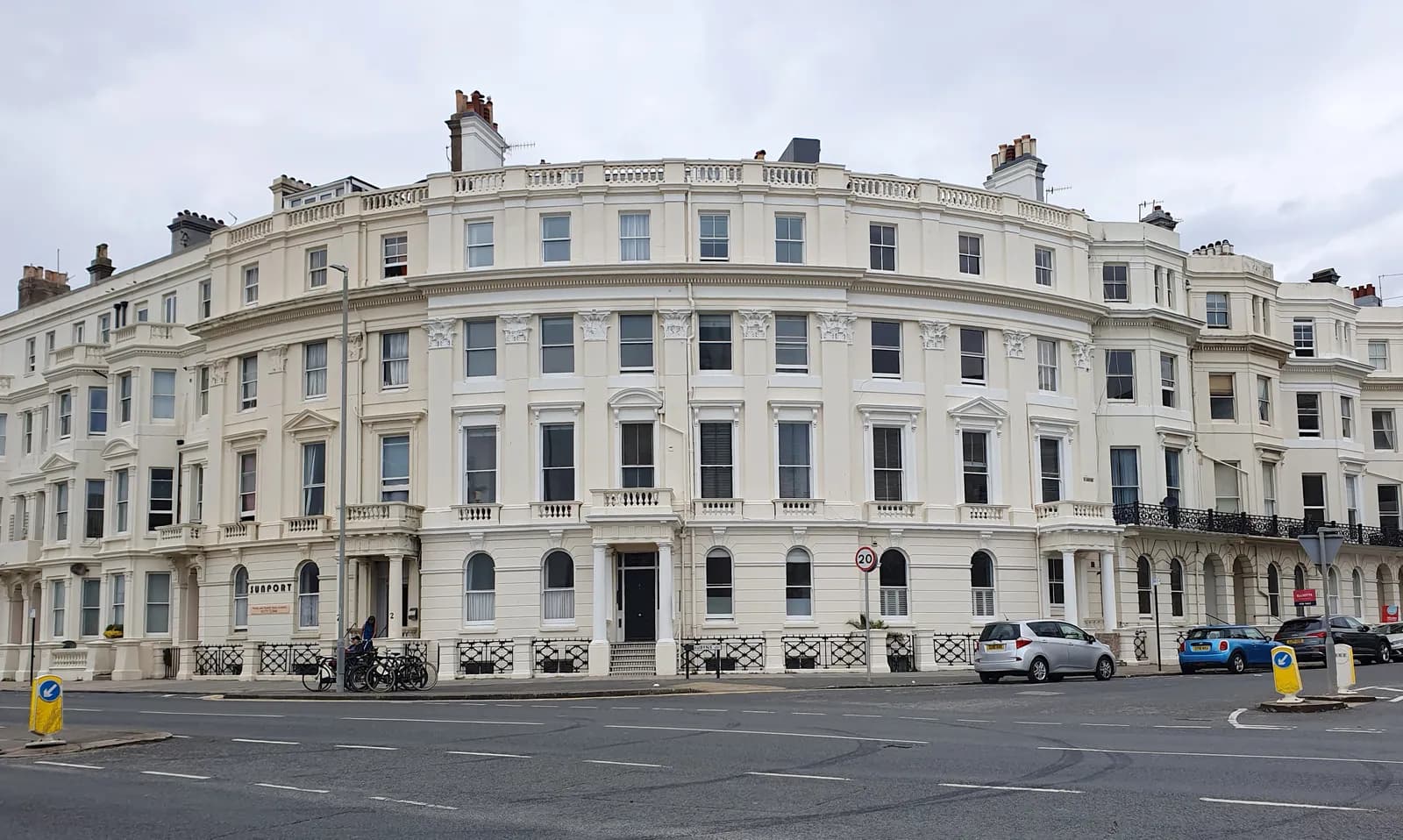
In 1814, Mahomed established his baths on the seafront at what is now the site of the Queen's Hotel. The venture proved an immediate success. His treatment combined Indian "champi" massage techniques with medicated vapour and seawater baths, offering relief for rheumatic conditions, stiff joints, and various ailments that plagued Regency society.
Royal Appointments and Growing Fame
Mahomed's reputation soon reached the highest circles. He was appointed "Shampooing Surgeon" to King George IV and subsequently to King William IV, treating two consecutive monarchs with his Indian therapeutic techniques. Hospitals began referring patients to his establishment, and he became known throughout Brighton as "Dr. Brighton."
The treatment he offered was described in contemporary advertisements as "The Indian Medicated Vapour Bath, a cure to many diseases and giving full relief when every thing fails; particularly Rheumatic and paralytic, gout, stiff joints, old sprains, lame legs, aches and pains in the joints."
A Family Business on Grand Parade
Mahomed's wife, Jane Daly, played an integral role in the enterprise. She possessed what sources describe as "the art of shampooing" and supervised the Ladies Baths, making the establishment one of the era's few thriving husband-and-wife medical partnerships.
The family settled at 32 Grand Parade, where they lived for approximately four decades. Mahomed documented his work in several publications, including Cases Cured by Sake Deen Mahomed, Shampooing Surgeon (1820) and Shampooing; or, Benefits Resulting from the Use of the Indian Medicated Vapour Bath, which saw multiple editions through 1838. The third edition was dedicated to King George IV.
Later Years and Legacy
Despite initial success, the business eventually faltered due to lack of capital. In the late 1830s, Mahomed's Baths was put up for auction, and the family moved to more modest accommodation. Mahomed died on 24 February 1851 at his Grand Parade home, aged 91 or 92, and was buried at St Nicholas Church in Brighton.
His legacy continued through his family. His son Frederick operated "Medicated and Hot and Cold Baths at Brighton" and ran a boxing and fencing academy nearby. His grandson, Frederick Akbar Mahomed, became a distinguished physician in his own right.
Recognition and Remembrance
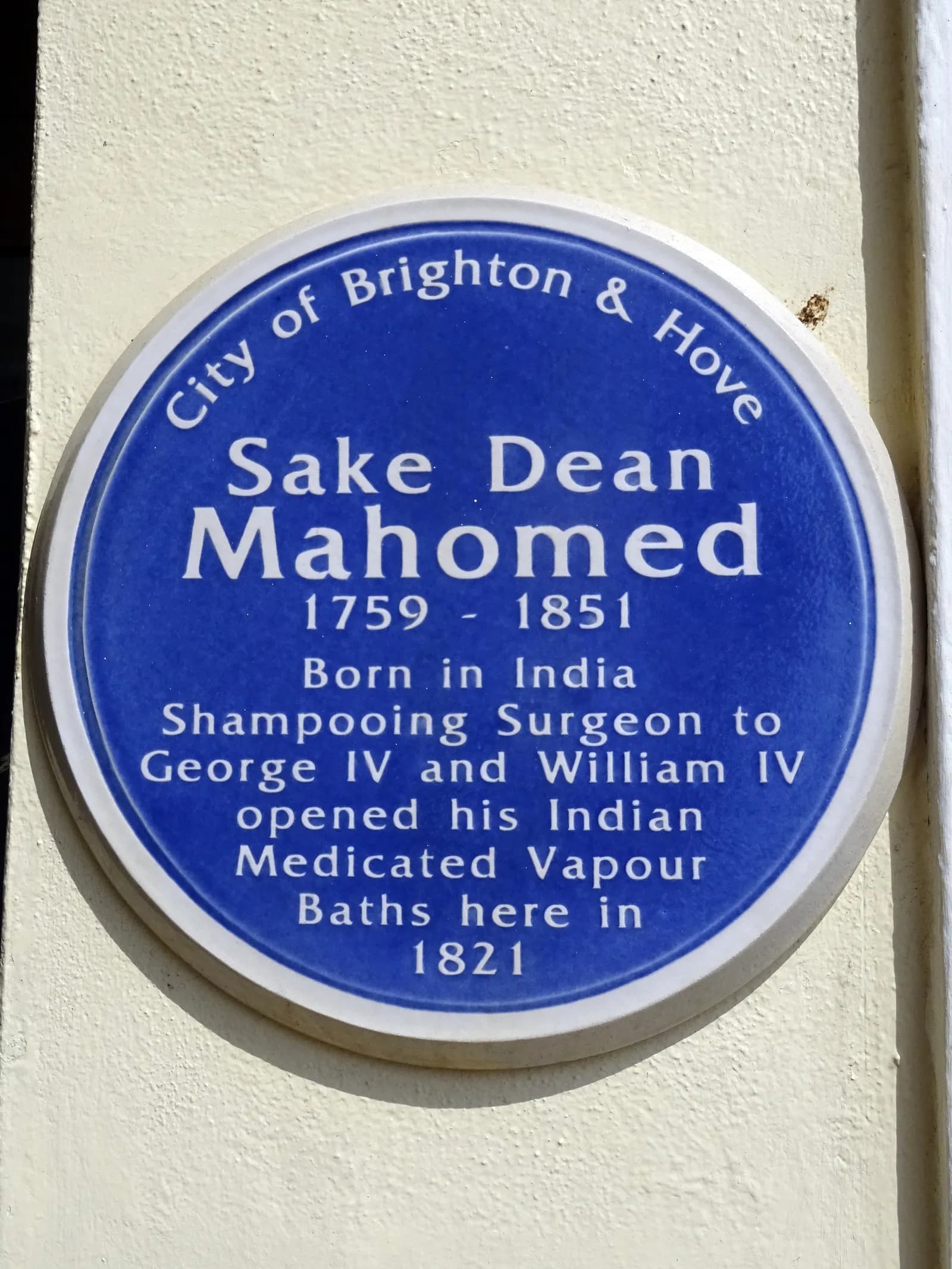
Today, Mahomed's connection to Brighton is marked by a blue plaque on the Queen's Hotel, commemorating the location of his Indian Medicated Vapour Baths. His grave at St Nicholas Church, a Grade II* listed building where he lies among other notable Brighton figures including Martha Gunn and Phoebe Hessel, was restored in 2025 by the Regency Society of Brighton and Hove.
Frances Lindsay-Hills, a committee member of the Regency Society, described Mahomed as "one of the most interesting and enterprising people to have ever lived in Brighton." James Tulley, the society's Vice Chair, noted that the restoration ensures "his story continues to be told and his legacy preserved for future generations."
In 2019, Google marked what would have been his 260th birthday with a Doodle, recognising his role in introducing both Indian therapeutic massage and the word "shampoo" itself into English usage.
For visitors walking past the Queen's Hotel today, few may realise that beneath the modern facade lies the site where an Indian surgeon from Patna first taught Brighton to shampoo, treating kings and commoners alike with remedies from his homeland.