George IV first visited Brighton as a young prince in 1783 and spent the next four decades turning a rented farmhouse into an extravagant seaside palace. The Royal Pavilion remains the defining landmark of the city's seafront, drawing around 200,000 visitors each year.
From Farmhouse to Palace
George, Prince of Wales, arrived in Brighton at the age of 21, prompted by his physician's advice on sea bathing for his gout and by the town's fashionable reputation, which his uncle, Prince Henry, Duke of Cumberland, had helped to establish. In 1786 he rented a modest farmhouse; it offered discretion for his relationship with Maria Fitzherbert and a retreat from court life. The following year he commissioned the architect Henry Holland to enlarge the building, creating the Marine Pavilion in a French-influenced neoclassical style. Further additions followed in 1801 and 1802, including a new dining room and conservatory designed by Peter Frederick Robinson. The grand riding school and stables, built between 1803 and 1808 by William Porden in an Indian style, hinted at the exotic transformation still to come.
Nash's Indo-Saracenic Vision
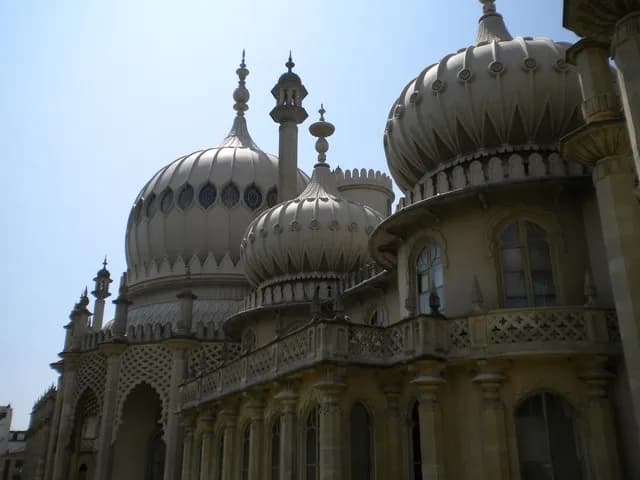
The building's current appearance owes most to John Nash, who between 1815 and 1822 redesigned and greatly extended the Pavilion. Nash drew on Indo-Saracenic architecture, incorporating Mughal-inspired bulbous domes, chhatri-topped minarets, and cusped arches; the result has invited comparisons with the Taj Mahal. Inside, the designers Frederick Crace and Robert Jones blended Chinese and Indian decorative fashions across the principal rooms. Nash also adapted structural techniques he had developed for the Rotunda at Carlton House, using laminated timber to create the dramatic tented roofs of the Music and Banqueting Rooms. The work was completed in 1823, by which time George had become King George IV.
From Royal Residence to Civic Treasure
After George IV's death in 1830, his brother William IV continued to use the Pavilion, but Queen Victoria found Brighton too exposed and the building too public for her taste; she preferred Osborne House on the Isle of Wight. Following her final visit in 1845, the government planned to dispose of the estate. The Brighton Improvement Commissioners and Brighton Vestry successfully petitioned Parliament, and in 1850 the town purchased the Pavilion for £53,000 under the Brighton Royal Pavilion Act 1850. Many of the original fixtures were removed to Buckingham Palace or Windsor Castle, although some were returned by Queen Victoria in the late 1860s and later by George V and Queen Mary after the First World War. The sale marked the moment the Pavilion shifted from a private royal retreat to a public attraction, helping to cement Brighton's transition from fishing village to popular seaside resort. The former royal stables were converted into the Brighton Dome concert hall in 1860.
A Wartime Hospital on the Seafront
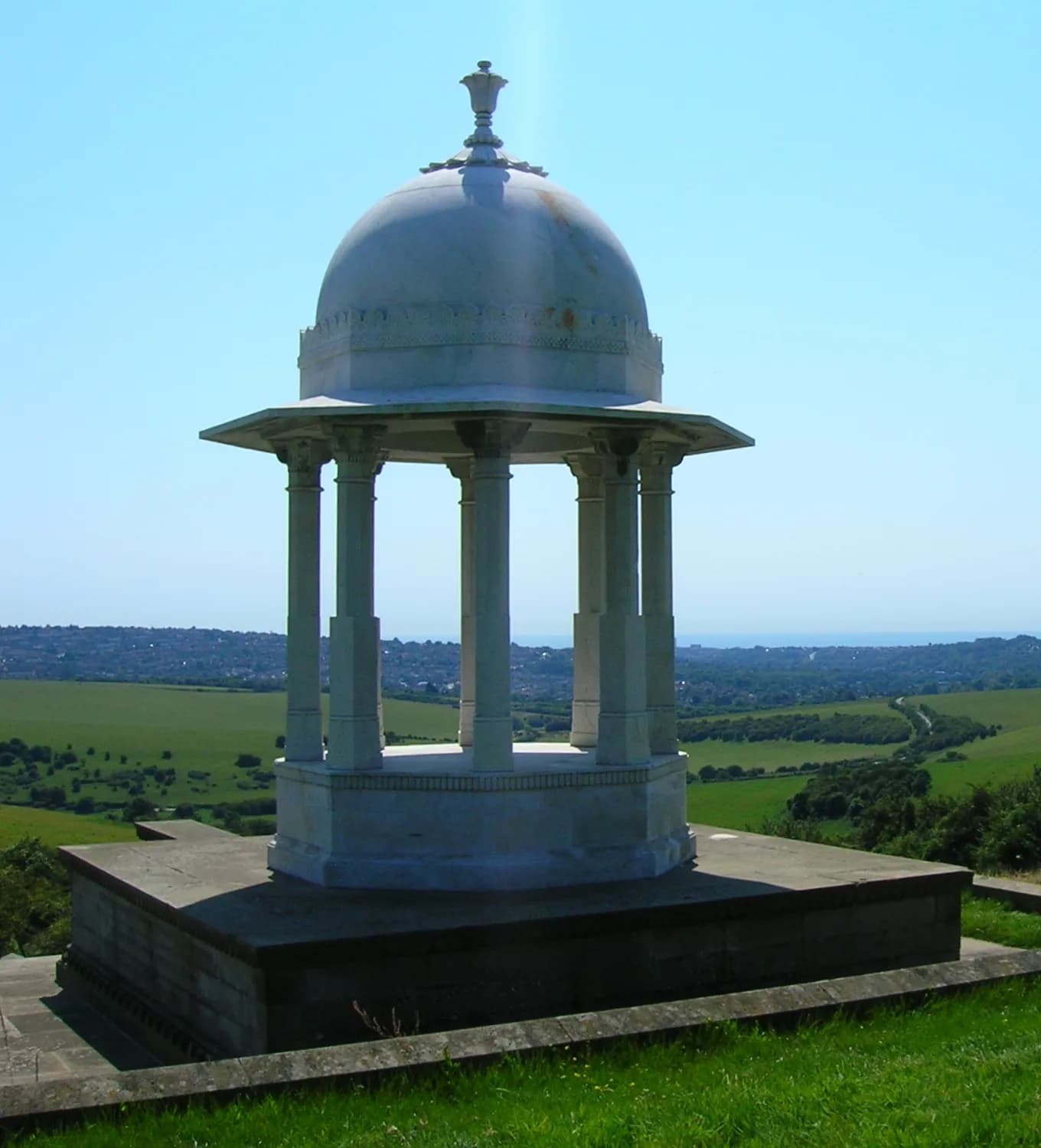
During the First World War the Pavilion served an unexpected medical role. From December 1914 to January 1916 it operated as a hospital for sick and wounded soldiers of the Indian Army, with two operating theatres and over 720 beds. More than 2,300 Indian soldiers passed through its wards. Nine separate kitchens were established to meet the diverse religious and cultural dietary requirements of the patients; Muslim soldiers were given space to pray towards Mecca, while Sikh patients had access to a tented gurdwara in the grounds. After the Indian hospital closed in January 1916, the building became a hospital for limbless British servicemen, providing rehabilitation and skills training from April 1916 until the summer of 1920. In 1921 the Maharaja of Patiala unveiled a new Indian-style gateway to commemorate the Pavilion's wartime service.
The Pavilion Today
In 2020 management of the Royal Pavilion passed from Brighton & Hove City Council to the Royal Pavilion & Museums Trust, a new charity that now operates the site. Many items on display remain on loan, particularly from HM The King. The surrounding Royal Pavilion Garden is Grade II listed and maintained using organic methods, though it was judged "at risk" by Historic England in October 2017 because of issues including unsightly fencing and anti-social behaviour. The building is also licensed as a wedding venue; it hosted one of the first legal same-sex marriages in the United Kingdom on 29 March 2014.